
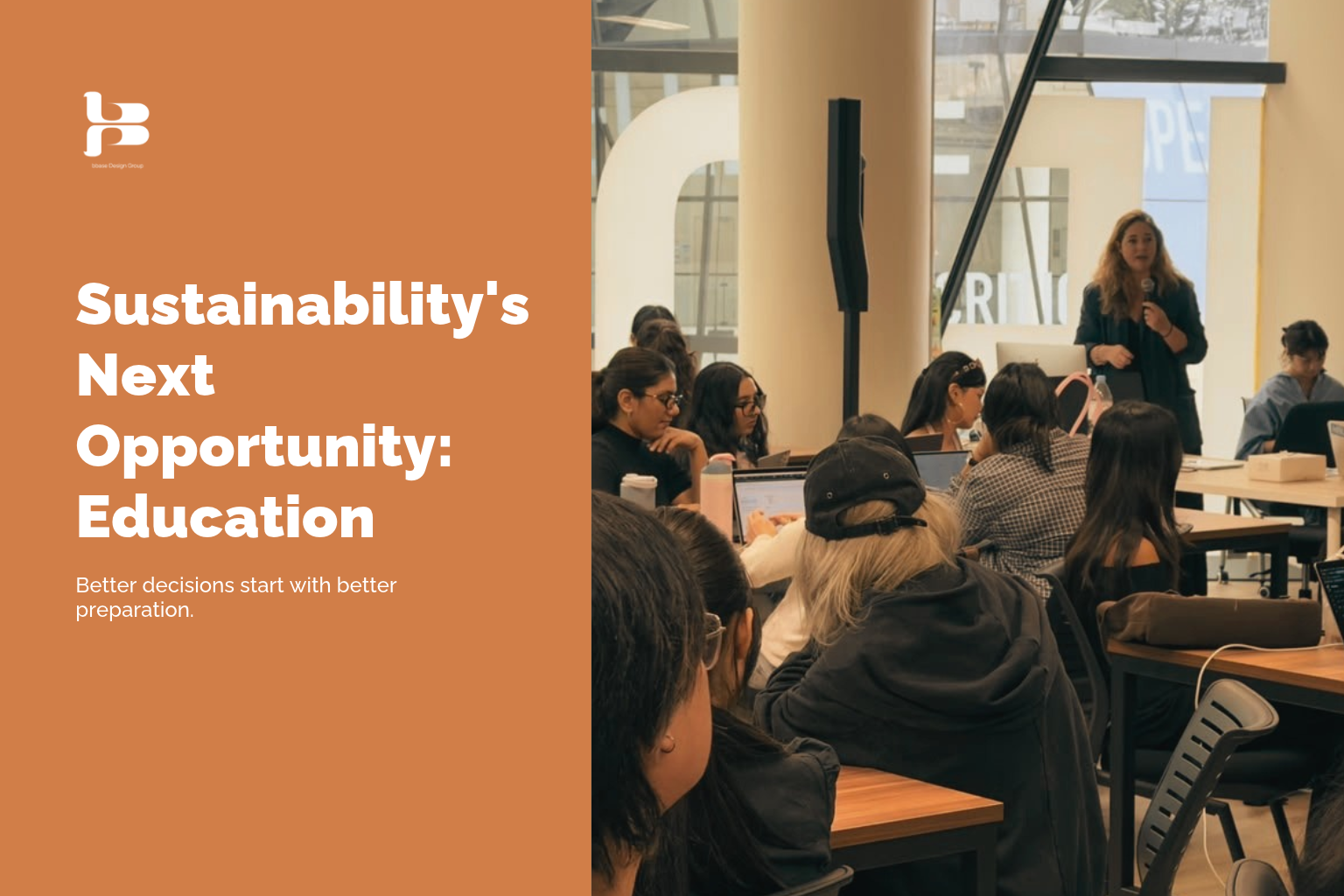
Sustainability is moving deeper into the way products are designed, made and brought to market. This raises a question that deserves more attention: are we preparing people to make the decisions this transition requires?
Sustainability is firmly on the business agenda, but putting it into practice is still a work in progress. BDO’s 2025 global sustainability survey found that 87% of respondents considered sustainability important to their business strategy, while only 25% reported having a mature sustainability programme. The research also identifies training, capacity building and cross-functional collaboration as areas businesses can strengthen.
Sustainability knowledge is becoming part of product development
Product development needs to embed sustainability into the process, balancing it with material, environmental performance, traceability, quality, price and manufacturability, while interpreting and applying this information becomes increasingly important and complex.
bbase’s own material journey shows this in practice. Working with recycled polycarbonate, biomass acetate and other responsible materials requires teams to understand their sustainability attributes, applications and communication.
Policy is reinforcing this need. Under the EU’s Ecodesign for Sustainable Products Regulation, textiles and apparel are priority product groups in the 2025–2030 Working Plan, while the Digital Product Passport will bring more product information into the value chain. As sustainability information grows, knowing how to act on it becomes just as important as having access to it. This is where education has a role to play.
As more sustainability information enters product development, access to it is only the starting point. People need to understand what it means and how it should influence the decision in front of them. That is where education becomes increasingly relevant.
From classroom to industry: incubbase
Education has an important role in closing that gap. UN Sustainable Development Goal 4 (SDG 4) calls for quality education and lifelong learning, with Target 4.7 specifically focused on ensuring learners acquire the knowledge and skills needed to promote sustainable development. This closely reflects the thinking behind incubbase, bbase’s education-to-industry initiative: sustainability education becomes more meaningful when students can connect what they learn with the decisions they will eventually make in industry.
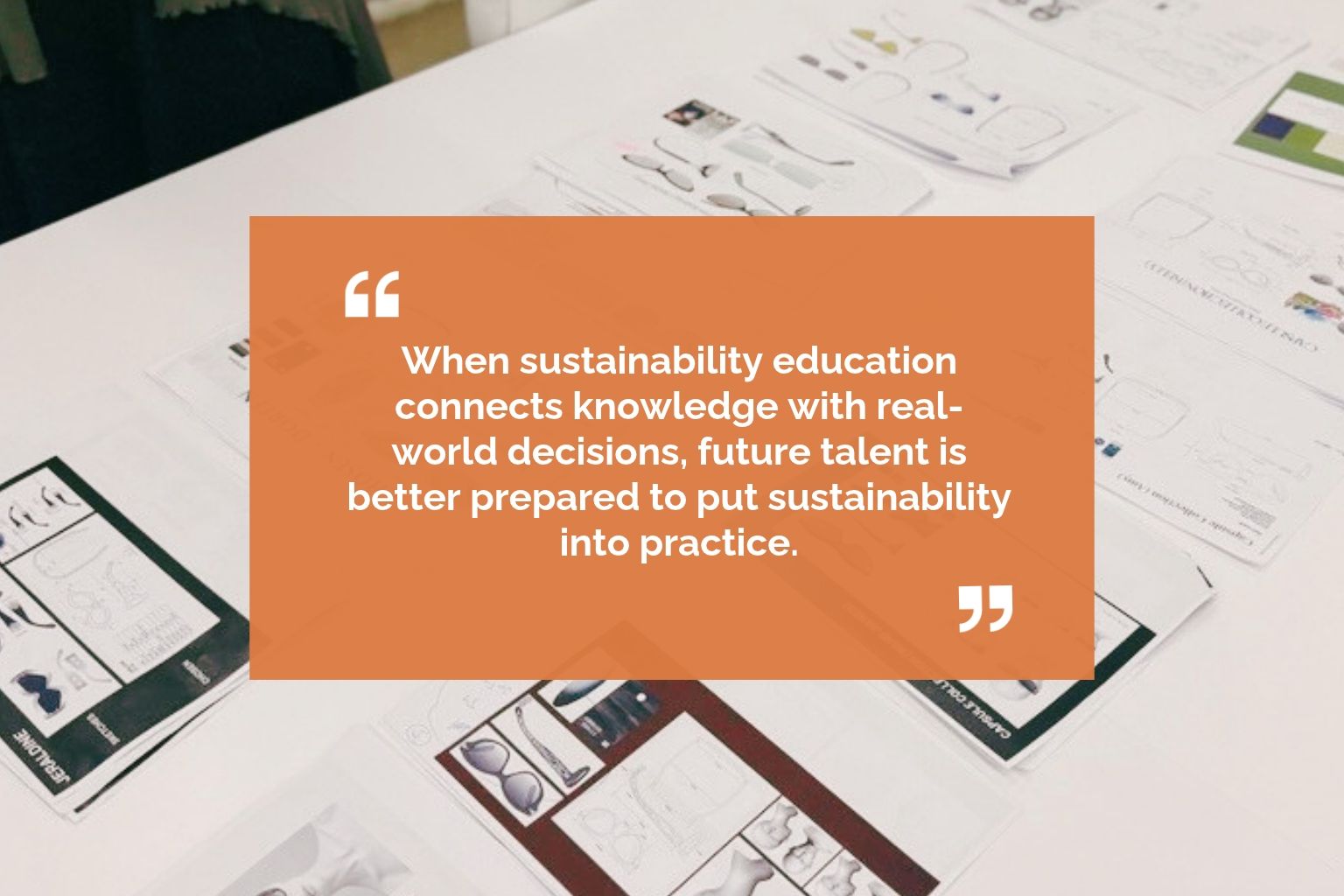
incubbase was launched by bbase in 2020. The education-to-industry initiative connects students with real industry challenges and the experience of taking ideas beyond the classroom.
Through collaborations involving institutions, industry and community partners including Hong Kong Polytechnic University, LASALLE College of the Arts, Nanyang Technological University, Eastman, The Museum at FIT and Selo Footprints Foundation, students have been exposed to product development, materials, technical considerations, industry practice and the wider social impact of design.
More than 260 students have been mentored through incubbase, while programme materials record 170 designs developed from concept to physical sample. Three selected student designs also progressed into market-ready products and were sold at DORS.
Behind those numbers is the real purpose of the programme: bringing sustainability into the way future talent thinks and makes decisions from the beginning.
Sustainability education needs to get closer to real decisions
Knowing the principles of circular design or responsible sourcing is a starting point. Applying them to a real product takes judgement. Give a student a product brief and sustainability quickly becomes tangible: which material makes sense? Can it work at scale? What happens when the original idea meets manufacturing requirements, cost and market expectations? There is rarely one answer, which is exactly why practical experience matters.
Today’s students will become the people making tomorrow’s product and business decisions. The choices they make across the product journey will help shape how sustainability is put into practice.
This also reflects what bbase Director Business Development, Afsha Clarke, said: “Sustainability education is essential to shaping the future of fashion and retail. As an industry, we must move beyond treating sustainability as an option and embrace it as the foundation of how we design, produce, and do business.”
That is where education can become part of sustainability transformation itself, and it’s also the thinking behind incubbase.
See more students’ designs from the digital showroom: bbverse
Contact for more information about incubbase: info@bbase.com.hk.
About bbase
bbase is a global eyewear design and production company working across product development, materials, manufacturing and sustainability innovation, founded over 24 years ago. Through initiatives including the bow Index and incubbase, bbase connects material knowledge, industry experience and education to support more informed approaches to product development and sustainability.